Why Your Story Matters

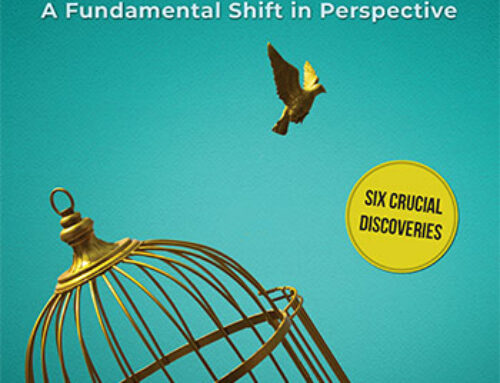
Image credit: Set Yourself Free by Dawn Meader www.dawnmeader.com
At a ritual leadership training I attended with Randy Jones, Canadian storyteller and ritualist, we were asked to create three ‘medicine’ cards using coloured textas.
The first card was to reflect our transcendent knowledge or powers—those gifts that come from spirit. The second depicted our ‘dark energies’ or emergent powers—the kind grown in the résumé of the soul, shaped by wounds and troubles. The third gave tribute to an ally or totem from the Otherworld.
I found this a potent exercise. I titled my emergent or dark power “the black hole of shame.”
From this experience—so familiar throughout my childhood and early adult years—I discovered story medicine.
I didn’t call it that until recently. But when I first began writing my story in my late twenties, the process became a lifeline. Slowly, it pulled me out of the sticky black swamp I’d come to think of as home.
Story as Lifeline
Guided by my writing mentor at the time, Barbara Turner-Vesselago, I began by writing what she called the “poor me” story—where I felt imprisoned and, truthfully, to which I was deeply attached.
Barbara never judged me for my early attempts to capture painful memories. With gentle but firm wisdom, she slowly helped me peel away the blinkered lenses through which I’d storied myself as a helpless victim—framed in blame and despair.
She didn’t do this by telling me to let go of bitterness.
She didn’t make my interpretations wrong.
She didn’t offer spiritual platitudes like “your soul chose this life to grow.”
And she didn’t guide me toward transcendence.
Instead, she encouraged me to zoom in.
To look more closely.
To unpick the threads of memory that reinforced my victim story—and begin reweaving a new path with perspective, forgiveness and, eventually, gratitude.
The Practice of Re-seeing
As I zoomed in, I started to add spaciousness and objectivity. This changed the way I portrayed my characters. I began to see that each person was simply doing the best they could with the lives they’d been given.
Where I once saw malice or neglect, I began to see good intentions gone awry.
Human beings like me—wounded, with shattered dreams of their own.
Layer by layer, year by year, I wrote and rewrote my story.
I focused in on the texture of small moments: conversations, sensations, the way light fell on a table during a memory. I reimagined scenes in dialogue and blow-by-blow action.
Then I zoomed out again—and glimpsed a kind of sense and beauty in it all.
A pattern.
A pathway by which I might emerge whole from these experiences.
This was in stark contrast to my earlier attempts to transcend my wounds through spiritual bypassing—or to reclaim power through blame and self-righteousness.
Moon in the Swamp
I’m reminded of the traditional English tale of “The Drowned Moon”, which I performed at Brave New Works Festival #26 in Denmark, on Halloween in 2019.
Moon, disturbed by tales of hauntings in the swampland, descends to investigate.
But the evil spirits she sought to confront capture her instead.
They drown her at the bottom of a black pool, trapping her beneath a heavy slab of stone so they can have darkness every night—and unfettered reign.
Days pass. Then weeks.
The frightened townsfolk eventually gather to search for Moon and restore her to the sky.
Guided by wise old Meg, they prepare for the rescue.
Her strange instruction: “Hold a stone on your tongue. Speak not a word until you are safely home again.”
Silence as Medicine
When I first heard this tale told by Perth storyteller Jaya Penelope, that call to silence rang through me like a bell.
I was supporting someone dear to me who was living with depression—and suddenly, I saw that my well-meaning advice wasn’t helping at all.
What they needed was my presence.
Not solutions. Not encouragement. Not suggestions.
Just a willingness to walk beside them.
To listen.
To honour their experience.
Sometimes, the best thing we can do is sit quietly beside someone and hold space.
Sometimes, we need to help them lift the slab of silence or shame.
Sometimes, we need to remind them there is still a starry sky above.
Emergence
Like Moon, who rose brighter and braver after her time in darkness, we too can emerge clearer and stronger.
Having travelled the edges of the psyche—through swamplands and forests, often barefoot and alone—we carry a kind of light that comes only from lived experience.
And when we shine this light gently into the lives of others, we become a quiet reminder that they too can find their way.
Closing
Perhaps the best thing we can do for someone who is lost or struggling is simply to say:
You are loved.
You are precious.
Your story matters.
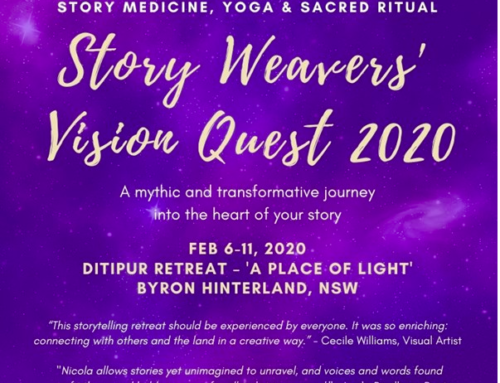
Contact me if you’d like to find out more about the Story Weavers’ Vision Quest in the Byron Hinterland from 6-11 February, 2020.
storyweavers.net.au/story-spinning
www.eventbrite.com.au/e/story-weavers-vision-quest-tickets-83305401699